
Abjad Numerology Table
Last reviewed · Free to reuse with attribution (CC BY 4.0)
The complete Abjad al-Kabir letter-to-number values in the Eastern (Mashriqi) order, with transliteration and the Persian, Urdu and Sindhi letter variants.
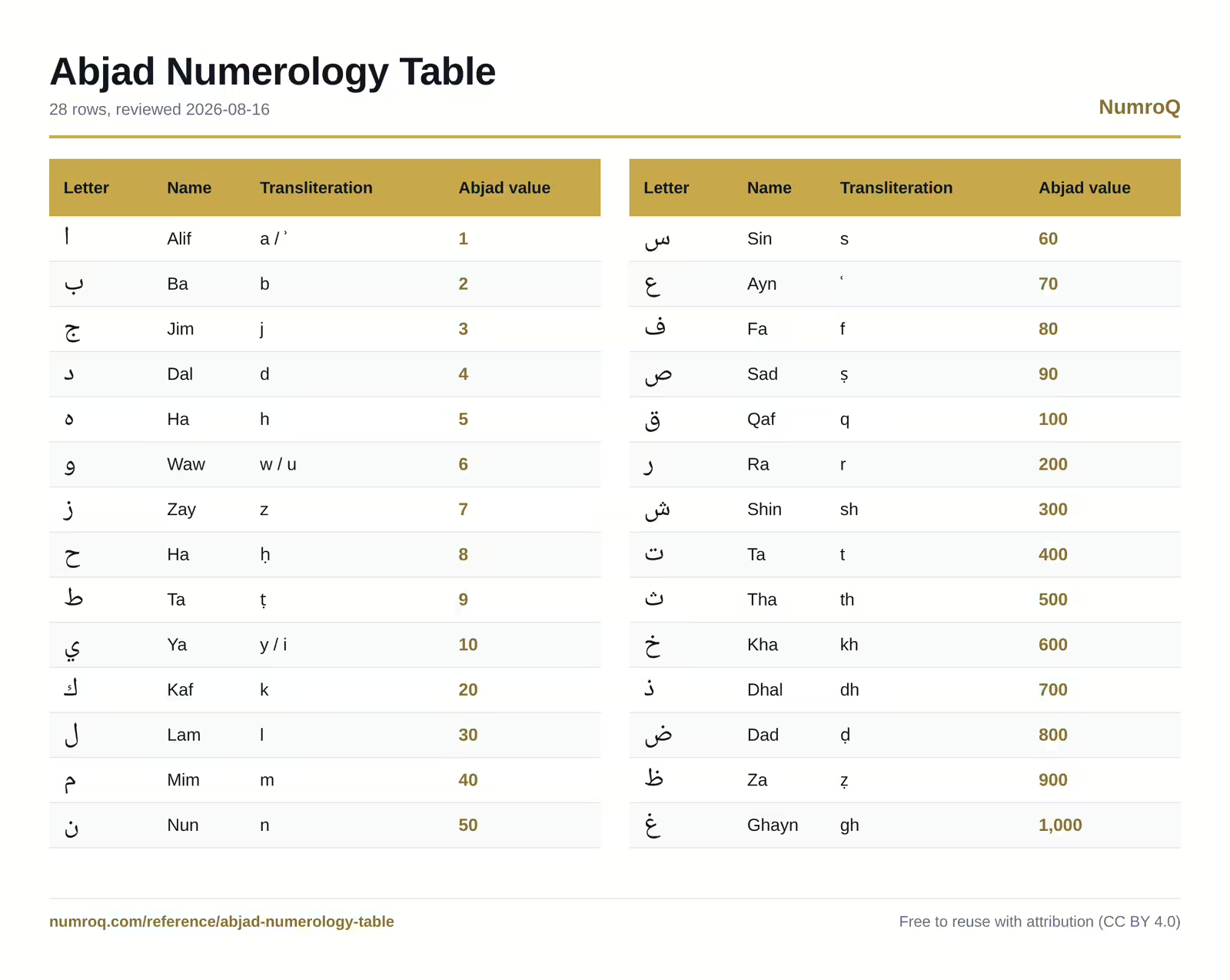
The Abjad (أبجد) system assigns a fixed numerical value to each letter of the Arabic alphabet. The table below is the Abjad al-Kabir ("great Abjad") in the Eastern, or Mashriqi, order used across the Arabic, Persian, Urdu and wider South Asian tradition, where the twenty-eight letters run from 1 to 1000. To find the Abjad value of a word, add the value of each of its letters.
The 28 classical Abjad letters
These twenty-eight values are the historical constants of the system and have been stable for over a thousand years.
| Letter | Name | Transliteration | Abjad value |
|---|---|---|---|
| ا | Alif | a / ʾ | 1 |
| ب | Ba | b | 2 |
| ج | Jim | j | 3 |
| د | Dal | d | 4 |
| ه | Ha | h | 5 |
| و | Waw | w / u | 6 |
| ز | Zay | z | 7 |
| ح | Ha | ḥ | 8 |
| ط | Ta | ṭ | 9 |
| ي | Ya | y / i | 10 |
| ك | Kaf | k | 20 |
| ل | Lam | l | 30 |
| م | Mim | m | 40 |
| ن | Nun | n | 50 |
| س | Sin | s | 60 |
| ع | Ayn | ʿ | 70 |
| ف | Fa | f | 80 |
| ص | Sad | ṣ | 90 |
| ق | Qaf | q | 100 |
| ر | Ra | r | 200 |
| ش | Shin | sh | 300 |
| ت | Ta | t | 400 |
| ث | Tha | th | 500 |
| خ | Kha | kh | 600 |
| ذ | Dhal | dh | 700 |
| ض | Dad | ḍ | 800 |
| ظ | Za | ẓ | 900 |
| غ | Ghayn | gh | 1,000 |
Persian, Urdu and Sindhi letter variants
Languages that extended the Arabic script added letters that are not part of the classical twenty-eight. In Abjad reckoning each of these takes the value of the base Arabic letter it is derived from (for example Gaf گ is read as Kaf ك = 20). The most common variants are listed below.
| Letter | Name / usage | Base letter | Value |
|---|---|---|---|
| پ | Pe (Persian/Urdu) | ب | 2 |
| چ | Che (Persian/Urdu) | ج | 3 |
| ڈ | Ddal (Urdu) | د | 4 |
| ہ | Gol He (Urdu) | ه | 5 |
| ة | Ta Marbuta | ه | 5 |
| ژ | Zhe (Persian) | ز | 7 |
| ی | Farsi Ye | ي | 10 |
| ے | Bari Ye (Urdu) | ي | 10 |
| ک | Keheh (Urdu/Persian) | ك | 20 |
| گ | Gaf (Persian/Urdu) | ك | 20 |
| ں | Noon Ghunna (Urdu) | ن | 50 |
| ٹ | Tte (Urdu) | ت | 400 |
| ڑ | Rre (Urdu) | ر | 200 |
| ڤ | Ve (Sindhi/Arabic) | ف | 80 |
Notes on counting
- Diacritics are not counted. Short-vowel marks (tashkeel), the shadda, tatweel and digits carry no Abjad value; a letter under a shadda is still counted once.
- Do-chashmi He (ھ, U+06BE) is an aspiration marker in digraphs such as بھ and کھ, not a counted letter, so it contributes 0.
- Eastern vs Western order. This table uses the Eastern (Mashriqi) order. The Western (Maghribi) order assigns different values from Sad onward; the two traditions agree on the first letters but diverge for the higher numbers.
Save or share this table
Cite this page
This table is published under a Creative Commons BY 4.0 license. You are free to reproduce it, including in AI and print, as long as you credit NumroQ with a link to this page.
NumroQ. "Abjad Numerology Table." NumroQ, 2026, https://numroq.com/reference/abjad-numerology-table.
Or link with: <a href="https://numroq.com/reference/abjad-numerology-table">Abjad Numerology Table – NumroQ</a>
Want to compute values automatically? Use the Abjad calculator to add up any word or name.